
8 Best Sites for Free 2D Game Assets & Templates (Perfect for iPad Game Devs)

Updated September 16, 2026. Resource pages and licence terms checked on this date.
Free 2D game assets can help you test a game idea before drawing every character, tile and button yourself. For an iPad project, start with a small pack of PNG graphics, a clear licence and one visual style.
Start with Kenney for a simple prototype. Pixel Frog and Ansimuz offer more specific platformer packs. Use the guide below to choose your art, then follow the iPad import steps.
hyperPad is a powerful visual game engine for creating and testing games directly on iPad. An asset pack supplies artwork; you build the gameplay with visual behaviours. A Unity or Godot template does not become a hyperPad project simply because its images can be imported.
Choose a resource for your game
- Simple prototype: Kenney. Its asset pages use CC0.
- Platformer: Pixel Adventure or SunnyLand. Check whether animations need frame preparation.
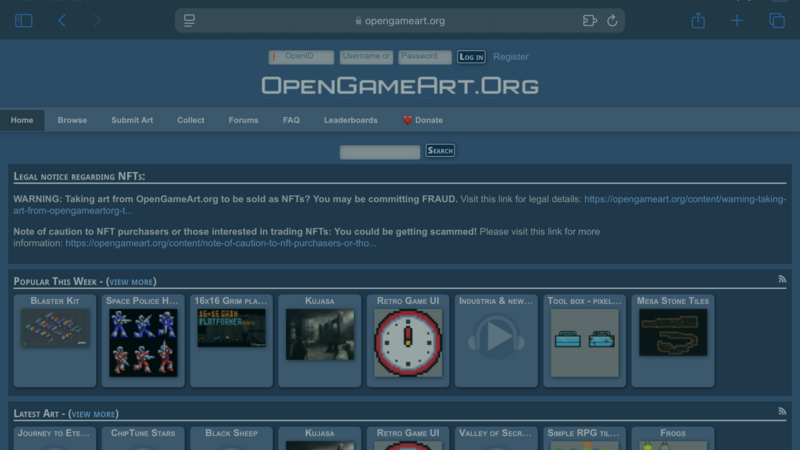
- Top-down art or a specific style: search itch.io or OpenGameArt, then read the individual licence.
- Interfaces and illustrated tiles: GameArt2D Freebies or CraftPix Freebies. Their sharing terms differ.
- Assets you already use on desktop: Unity Asset Store, subject to its EULA and file preparation.
1. Kenney: a straightforward starting point
Kenney's asset library is a good place to choose a matching set of characters, tiles or interface elements. Open a 2D pack and check its included formats before downloading.
Kenney's licence guidance confirms that assets on its asset pages use CC0, including commercial use, with no required attribution. Save the included licence file with your project. This statement applies to those game assets, not every product or logo on the website.
2. itch.io: search by style, then check the pack
Use the free 2D assets filter. Check the creator's description, downloadable files and licence before choosing a pack. A free download is a price, not permission to use the art however you want.
Some listings include a free sample alongside paid extras. For iPad, look for PNG files or a ZIP of graphics. Engine projects, shaders and scripts need a separate compatibility check. Pixel Adventure and SunnyLand below are specific examples with published licence information.
3. OpenGameArt: read the individual licence
OpenGameArt hosts art under several licences. Read the licence and Copyright/Attribution Notice on the actual download page. Its licensing FAQ explains the differences and flags potential App Store distribution conflicts for some licences.
CC0 is a simpler starting point. Attribution and share-alike licences have additional conditions; do not assume adding an artist's name is enough for every intended use. Save the source page and full licence with the files.
4. CraftPix: useful freebies with sharing limits
CraftPix Freebies includes sprites, tilesets, backgrounds and interface art. Its Freebie Products licence allows personal and commercial projects and modifications without required credit.
It restricts redistribution of the art as reusable source files. Before including CraftPix graphics in an editable Hub project, classroom resource or template, check the applicable terms and permissions. A finished game and a reusable asset collection are different uses.
5. GameArt2D: use the Freebies section
GameArt2D Freebies includes character sprites, tilesets and game interfaces. The Free Platformer Game Tileset is one concrete place to start.
The site's licence page identifies its Freebies as CC0, with commercial use allowed and credit optional. Paid assets use different terms. Choose an original-looking set that suits your project; a licence does not grant rights to someone else's trademarks or characters.
6. Pixel Frog: Pixel Adventure
Pixel Adventure provides PNG characters, objects, tiles and items. Its page explicitly states CC0, allows commercial use and does not require attribution.
Choose Pixel Adventure 1.zip. This is artwork, not a ready-made hyperPad game. If an animation arrives as a strip or grid of frames, prepare individual frames or a compatible sprite sheet before importing it as an animation.
7. Ansimuz: SunnyLand
SunnyLand offers platformer characters, enemies, scenery and effects. The asset page lists CC0. Choose Sunny-land-files.zip for the art; the Phaser and Godot projects are separate downloads. The Plus download is paid, so it is not part of this free recommendation.
Use a small selection to make your first scene. Keep any included notices, especially when adding separately credited music or other files.
8. Unity Asset Store: an option with extra preparation
The Unity Asset Store can be useful if you already have assets in a desktop project. Set the category and price filters on the store; check the actual pack's formats and licence.
Unity's cross-engine guidance permits use in other engines subject to its EULA and any separate terms. Restrictions include sharing extractable source assets. Follow its download instructions, and transfer compatible graphics to iPad. For an iPad-only start, choose a direct PNG or ZIP source above.
Download and import assets on iPad
1. Keep the art and licence together
Download your chosen ZIP in Safari. Find it in Files and tap it to create an extracted folder, as shown in Apple's ZIP guide. Keep the original download, licence and source URL together. Use a folder name such as “My game / Art / Pack name”.
Start with one character, one ground tile and one background. This keeps your first import easy to check.
2. Import a static PNG first
Open your hyperPad project, then Asset Library → Import → Graphics → Files. Browse to the extracted folder and select your PNG. PNG is useful for transparent backgrounds. See the asset import guide for supported options.
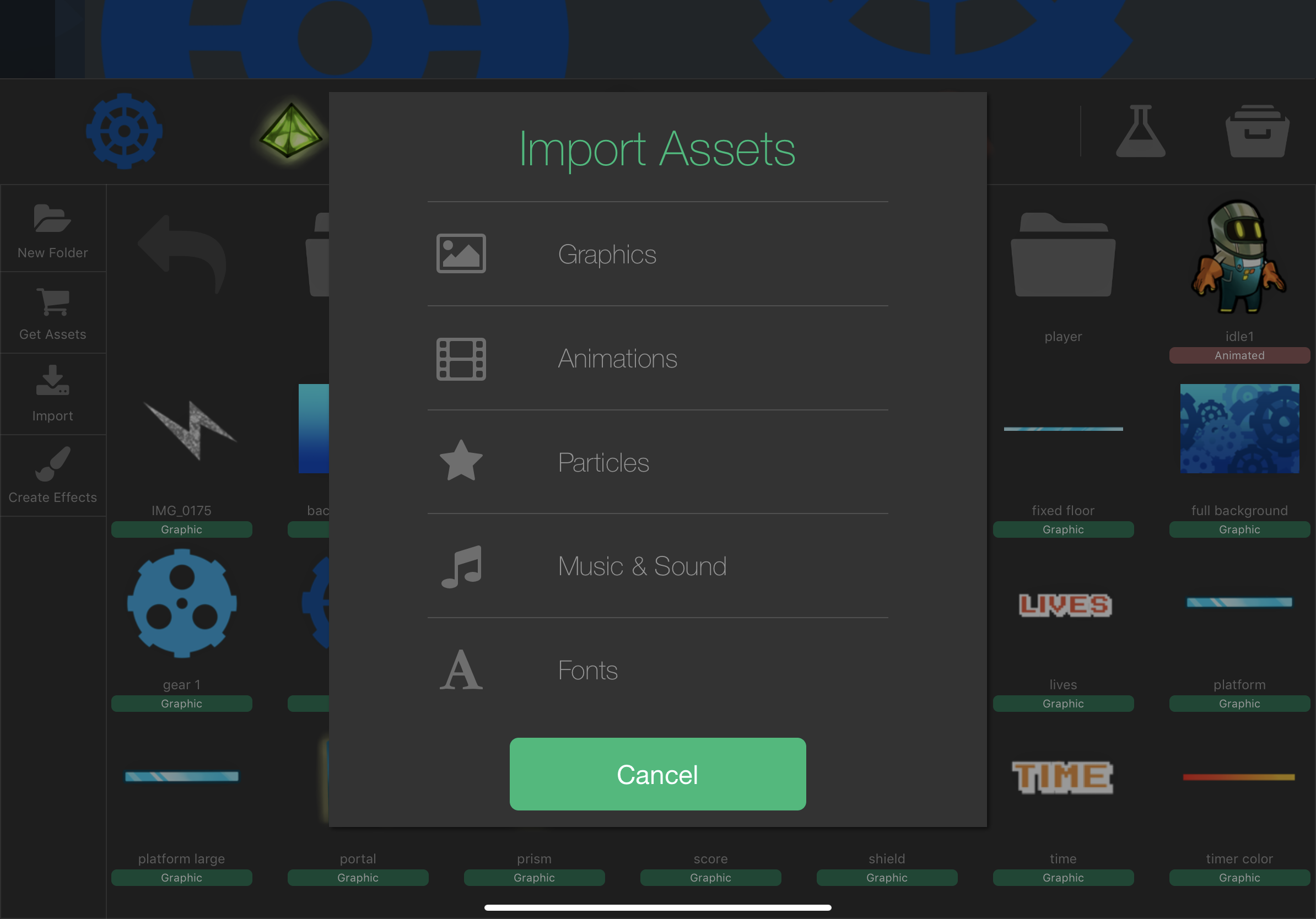
Choose Graphics for a static image. Screenshot from hyperPad's documentation; appearance may vary by version.
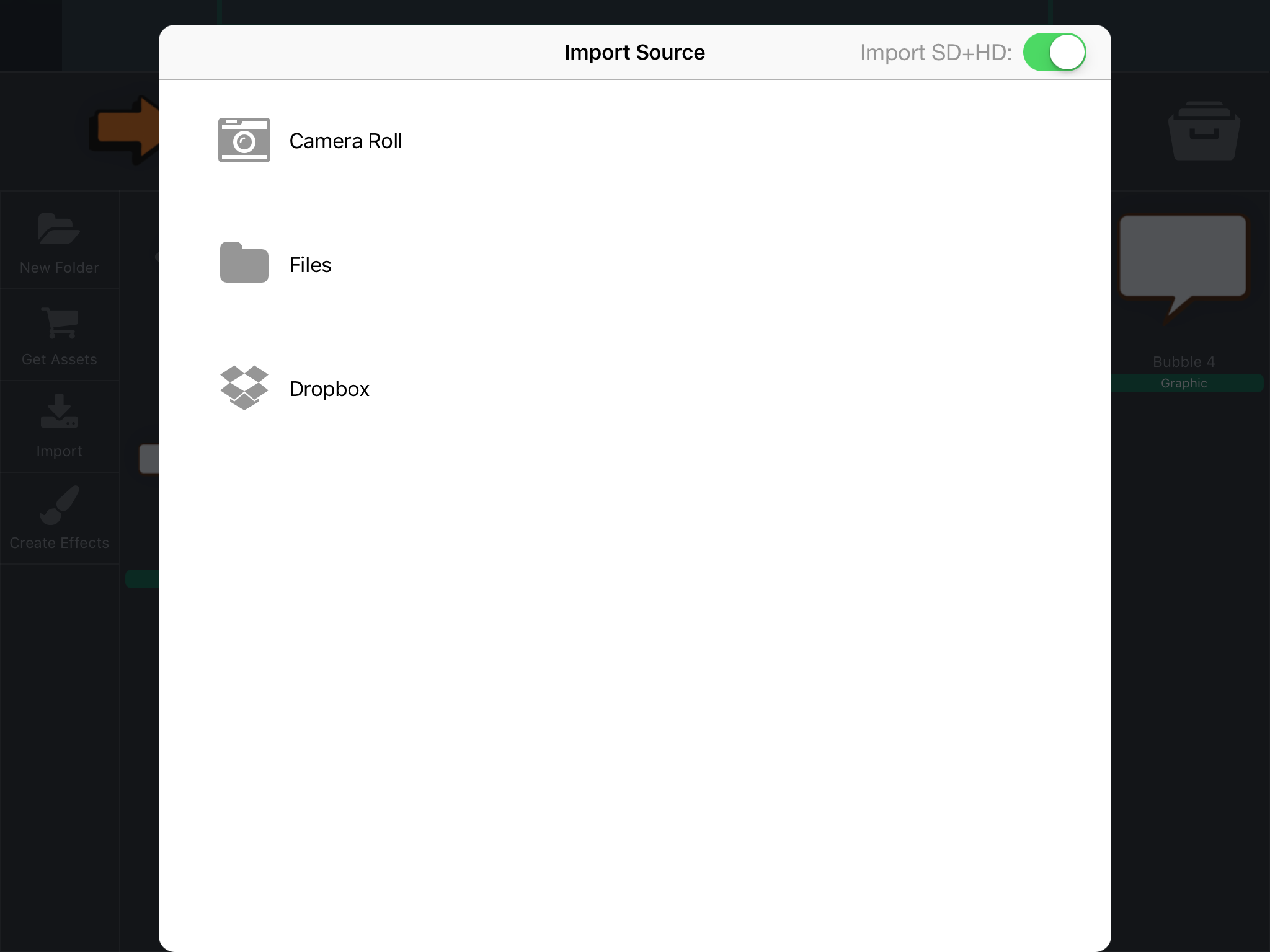
Choose Files to browse your extracted pack. This reference screenshot shows Import SD+HD enabled; leave it off for a normal single-resolution import.
3. Check animation files before importing
For separate frames, use Import → Animations → Create Animation. Keep frame dimensions consistent and names in playback order. Preview the result before using it.
A PNG containing many poses is not automatically an animation. The sprite-sheet import route needs a compatible PNG plus its Cocos2D PLIST data file. A Unity package, Godot project or plain grid image is not a substitute. See importing and using animations for preparation and playback options.
4. Make one interaction work
Build a small test: place a character in the scene and make a tap play its animation. In the Behaviour Editor, connect Started Touching to Play Animation, choose the animation and press Play. This gives you a quick check of the artwork and the interaction before adding a full level.
For project setup, follow Create Your First Game on iPad. For the wider process, read the iPad game-development guide.
If the asset does not look right
- The whole sprite sheet appears: you imported the sheet as a static graphic. Use individual frames or prepare the PNG and PLIST pair.
- A white box surrounds the character: check that you downloaded a transparent PNG, not a preview or JPEG.
- The animation jumps between frames: check image dimensions, character alignment and frame order.
- The import fails: check the file type and dimensions against the import guide; test one smaller image first.
- The pack contains only engine files: return to the creator's page for standalone graphics. Renaming a file does not convert it.
Check permissions before sharing your project
Keep a short asset record: pack name, creator, source URL, licence, download date and any edits. Add required credits to the project.
CC0 permits broad reuse without attribution, but does not clear third-party trademark, privacy or publicity rights. Other licences may permit a finished game while restricting access to the original files. Before sharing an editable project on the Hub or distributing a template, make sure that use is allowed.
Portfolio images and downloadable game assets should not be treated as interchangeable. Always use the creator’s actual download and its licence.
Build your first scene
Pick one pack, import a character and make one interaction work. Start small, then add your own art and gameplay ideas.