
How to Make a Pixel Art Arcade Game on iPad

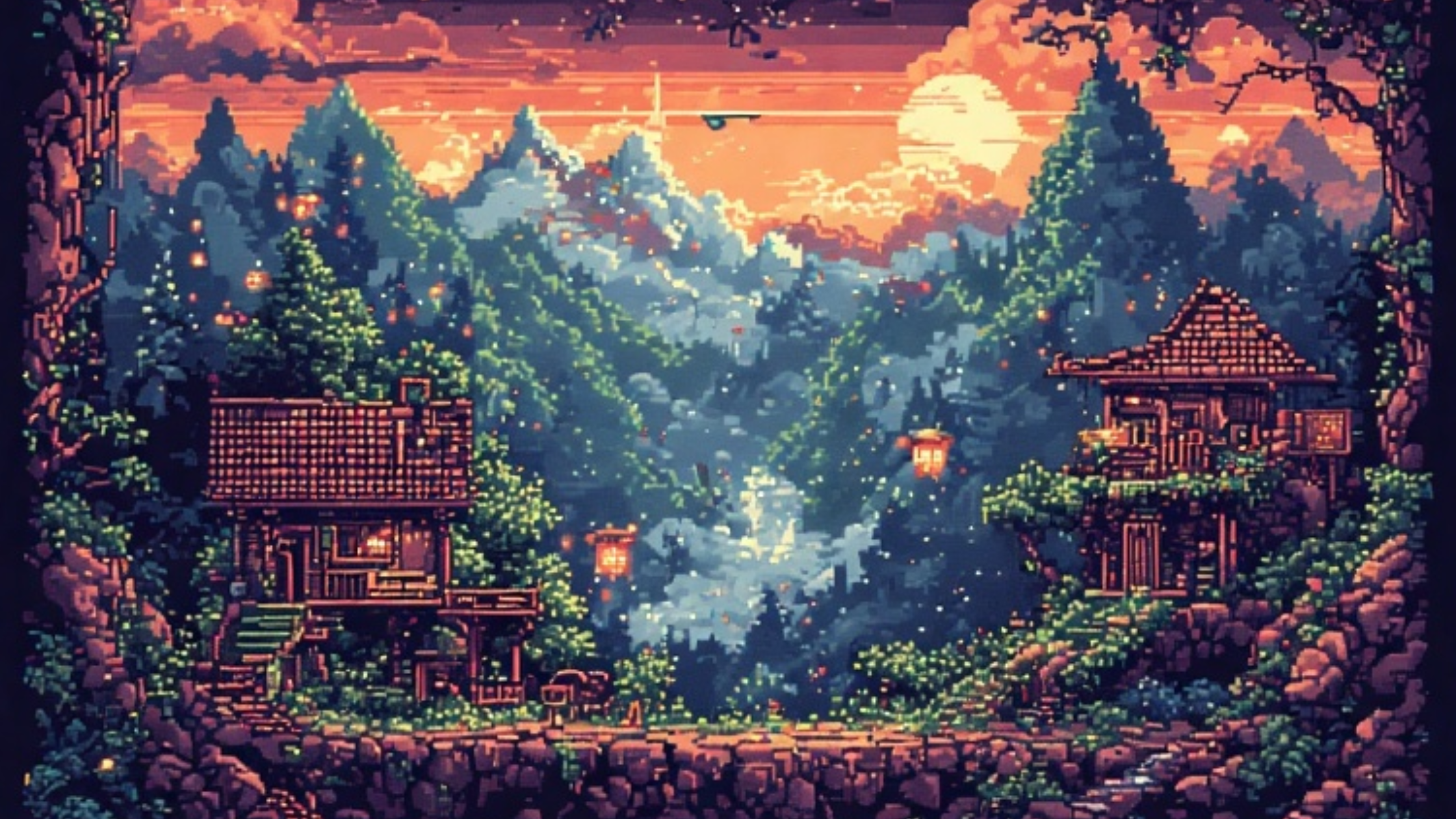
You can make a pixel art arcade game on iPad by starting with one repeatable loop: move, collect, avoid, score, and restart. hyperPad provides the Scene editor, physics, UI, and visual Behaviors. A pixel art app can supply the sprites and tiles.
This guide replaces the old “Pixel IO” premise with an original single-player arcade project. Online multiplayer requires a separate server and a more advanced networking workflow, so it should not be implied by a simple beginner build.
The game loop
The player moves through one arena, collects energy cells, and avoids roaming enemies. Each cell increases the score. Contact with an enemy reduces health. The round ends when the player collects every cell or loses all health.
| System | Objects or values | What the player sees |
|---|---|---|
| Movement | Player Object and input Behaviors | The character responds immediately |
| Collecting | Energy-cell tag and collision event | The item disappears and score changes |
| Danger | Enemy Objects and health value | Damage feedback and reduced health |
| Progress | Score and remaining-item state | Clear UI and a completion condition |
| Replay | Reset or Scene reload logic | A clean second attempt |
1. Create one arena
Start with one Scene. Add a floor or boundary, one player Object, three collectables, one enemy, a score label, and a health display.
Use placeholder Graphics until movement and collision work. Pixel art is easier to size after you know how large each Object appears during play.
2. Add player movement
Choose a control scheme that suits the arena. A joystick can support movement in multiple directions. Touch controls can move toward a point or trigger fixed directions.
Test acceleration, maximum speed, and stopping distance before adding more systems. The player should feel in control in an empty arena.
3. Build the collectable system
Give each energy cell the same Object tag. A Collision Event can detect contact, and tagged Objects can pass the specific item into connected actions.
Use Add to Score for visible scoring. Connect Play Sound and Destroy Object so the player receives immediate feedback.
The Object Tags guide explains how one Behavior system can work across a group of collectables.
4. Add one enemy pattern
Begin with a predictable enemy. It can move between two points, follow a simple path, or change direction after a collision.
The first enemy should test positioning rather than surprise the player. Add a visible warning, animation, or sound when damage occurs.
Store health in an Attribute or use the appropriate UI system. When health reaches zero, stop the active controls and show a clear retry option.
5. Define the win condition
Track how many energy cells remain or how many have been collected. When the final item is collected, show a completion overlay, play a distinct sound, and stop the round.
The player should understand the goal before the round ends. Use a label, opening prompt, or visible collection target.
6. Create and import pixel art
Use an iPad pixel art tool such as Pixaki or your preferred art app. Keep frame dimensions consistent and use nearest-neighbor scaling in the art workflow when you want crisp pixel edges.
Export original sprites with transparent backgrounds. The Importing Assets guide covers bringing Graphics into hyperPad. For animation frames or sprite sheets, use Importing and Using Animations.
Test every sprite inside the arena. Check contrast, scale, alignment, and whether the visible shape matches its collision area.
7. Make restart dependable
A retry should restore the player position, health, score, enemy state, and collectables. Test three complete rounds without leaving the Project.
If state remains from the previous round, fix the reset before adding another arena.
8. Playtest the difficulty
Give the game to another person without explaining it. Watch whether they:
- understand the goal;
- find the controls;
- recognize collectables and enemies;
- notice damage;
- know when the round ends;
- can restart.
Change one problem at a time. A clearer effect or better Object placement may improve the game more than another enemy type.
What about online multiplayer?
hyperPad includes a documented Socket.io multiplayer tutorial, but it is an advanced workflow that uses a separate server and assumes networking and written-programming knowledge. Finish the single-player loop first.
Build the arcade loop before expanding it
One clear arena can teach movement, collision, tags, state, UI, feedback, and restart logic. Once that loop works, you can add new enemy patterns, power-ups, or another Scene without rebuilding the foundation.