
Mobile Game Marketing Strategy: A Practical Guide for Indie Devs

Most indie mobile games fail at marketing rather than at development. The game works. Nobody finds it.
This guide lays out a mobile game marketing strategy you can run on your own, split into what happens before launch, during launch week, and after. It assumes no budget to start with and shows where money helps once you have one.
Start With Your Audience
Every marketing decision downstream depends on knowing who you are talking to. Do this before your first screenshot.
Answer four questions:
- Who plays games like yours? Age, region, and the games they already play.
- Where do they spend time? TikTok, Reddit, Discord, and YouTube attract different crowds.
- What do they say about games like yours? Read the one-star reviews of your closest competitors. Those reviews tell you what to promise and what to avoid.
- How do they find new games? Browsing the App Store, watching a streamer, or hearing from a friend. Each one calls for a different tactic.
A worked example. If you are making a monster-collecting game, your audience skews 16 to 25, is heavily on TikTok and Reddit, and finds games through short clips of a single satisfying mechanic. That tells you what to build your marketing around: clips, not press releases.
Write the answers down. A strategy you cannot state in four sentences is not a strategy.
Then turn them into a simple player persona: an age range, a few interests, and two or three favorite games. Check every post, clip, and ad against that one person.
App Store Optimization Comes First
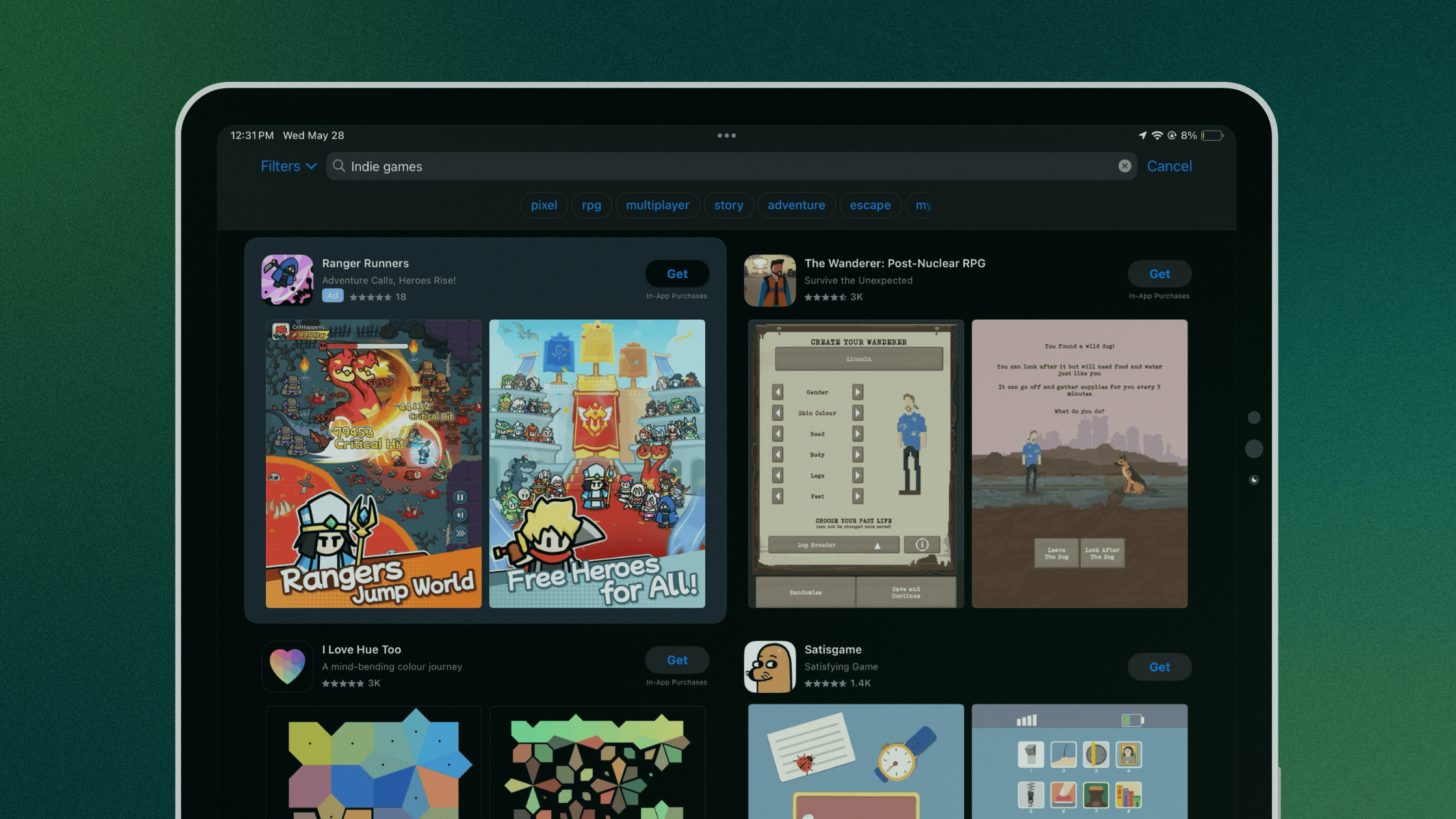
Most downloads start with an App Store search. Your listing is doing more work than any campaign you run.
Title. Your game's name plus one descriptive phrase people search for. You get 30 characters.
Subtitle. Another 30 characters, and it is indexed. Use it for a phrase your title does not cover.
Keyword field. 100 characters, comma separated, no spaces. Do not repeat words already in your title or subtitle, since those are indexed too. Do not add plurals, since Apple handles them.
Screenshots. The first two show in search results. Most people decide there and never open your page. Put your best mechanic in screenshot one, with a short caption on the image itself.
Preview video. Autoplays silently. It must be readable with the sound off.
Description. The first two lines show before More. Write those as the whole pitch. Our guide to writing a game description has a template and worked examples.
Icon. Test it at actual size on a home screen, next to other icons. Detail that reads on your monitor disappears at 60 pixels.
Change one element at a time, wait two weeks, and look at the conversion rate in App Store Connect. Changing three things at once tells you nothing.
Organic Channels
With no budget, this is the whole plan.
Short video. TikTok, Reels, and YouTube Shorts. The format that works is one mechanic, shown clearly, in under fifteen seconds. Skip the trailer and show a single satisfying thing happening.
If you drew the art yourself, it's your hook. Procreate for art and LumaFusion for video editing run on the same iPad as hyperPad, so you can make and edit your clips on one device.
Devlogs. Post progress while you build. People who watch a game get made feel invested in it launching. This works on Twitter, Bluesky, YouTube, and in subreddits that allow it.
Reddit. Find the two or three subreddits for your genre and read their self-promotion rules before posting. Genre subreddits convert better than general gaming ones, by a lot.
Discord. Join communities for your genre months before you launch. Participate. A single post in a server where nobody knows you does less than nothing.
The hyperPad Hub. If you build with hyperPad, Publish an early version to the Hub and join the hyperPad Discord. Other creators give honest feedback, and some become your first fans. hyperPad also gives shout-outs to creators' games on its own channels.
Your own list. Collect emails from day one. It is the only audience no algorithm can take away from you.
The pattern behind all of these: start eight to twelve weeks before launch. An account created the week you ship has no reach.
Nostalgia Is a Real Lever
One angle worth knowing about, because the research supports it.
Nostalgia influences purchasing behavior, and games are particularly well suited to it. Pokemon GO is the standard example: it passed 10 million downloads faster than any mobile game before it (Molina, 2016) and over a billion by 2019 (Thubron, 2019). Part of that was the technology. Most of it was twenty years of attachment to the characters.
Studies find that consumers spend more on products that reconnect them to childhood memories (McCarthy, 2019), and that nostalgia shapes purchase decisions by surfacing positive associations (Eloranta, 2022).
For an indie game this rarely means licensing anything. It means art direction, music, and mechanics that reference a specific era on purpose. A pixel art style, a chiptune soundtrack, or a Game Boy color palette all do this work, and they cost nothing extra.
Building the game on iPad? Try hyperPad Starter free. One project, all the building tools, and you can Export to the App Store when you upgrade.
Paid Advertising
Only after your listing converts. Paying to send traffic to a page that does not convert is how budgets disappear.
Apple Search Ads. The highest intent traffic you can buy, since these people are already searching the App Store. Start with your own brand terms and your closest competitors.
TikTok and Meta. Cheaper impressions, lower intent. Your creative decides everything. Run five variations of a fifteen-second clip and kill the four that lose.
Start small. A few hundred dollars over two weeks tells you your cost per install. Scale only what already works.
The number to watch is cost per install against what a player is worth to you. If a player generates two dollars and an install costs three, more spending makes the problem larger.
A Launch Plan
Eight weeks out
- Build the App Store listing and set a release date so you can collect pre-orders.
- Start posting devlogs.
- Join the communities you plan to launch into.
- Open your email list.
Four weeks out
- Cut your trailer and your screenshots.
- Reach out to streamers and YouTubers who cover your genre. Small channels reply. Large ones rarely do.
- Offer early access or a review code. Mention that you made the game on an iPad: plenty of streamers find the process as interesting as the game.
- Prepare a press kit: logo, screenshots, a 100-word description, and your contact details, in one folder.
Launch week
- Post on every channel you have built up.
- Answer every comment and every review in the first 72 hours. Early reviews weigh heavily.
- Watch your crash rate before your download count. A bad first week of reviews is difficult to recover from.
After launch
- Ship an update within the first month. It signals the game is alive.
- Turn your best players into a community. A Discord costs nothing.
- Look at where installs actually came from, and do more of that.
- Seasonal updates give you a reason to market the game again without building a new one.
Lessons From Big Mobile Launches
Big studios have budgets you don't, but the tactics behind their launches scale down.
- Streamers can make a game. Among Us by InnerSloth had modest success at first, then took off once streamers and influencers picked it up.
- Influencer partnerships buy reach. Raid: Shadow Legends partnered with YouTube and Twitch influencers, which gave it wide visibility.
- Trailers set expectations. Genshin Impact built its pre-launch interest with trailers that showed its open-world gameplay.
- Press amplifies a launch. The launch of Fortnite Mobile was covered widely by gaming and tech media, which extended its reach.
- Events give players a reason to come back. PUBG Mobile runs themed events and crossovers with other franchises, and Clash of Clans by Supercell pairs in-game events with social posts and YouTube content.
- Community posts keep fans close. Brawl Stars by Supercell uses social media to announce updates and share fan art.
For a solo developer, that means one streamer who loves your genre, one clear trailer, and a seasonal update or event.
What to Measure
Four numbers, checked weekly:
- Impressions to product page views. Your icon and your first screenshot.
- Product page views to downloads. Your screenshots, description, and reviews.
- Day 1 and day 7 retention. Whether the game holds up. Marketing cannot fix a retention problem.
- Cost per install, by channel. Where to put the next dollar.
If retention is poor, stop marketing and fix the game. Sending more players into a leaking bucket wastes the one launch you get.
Build the Game First
All of this assumes you have something to market.
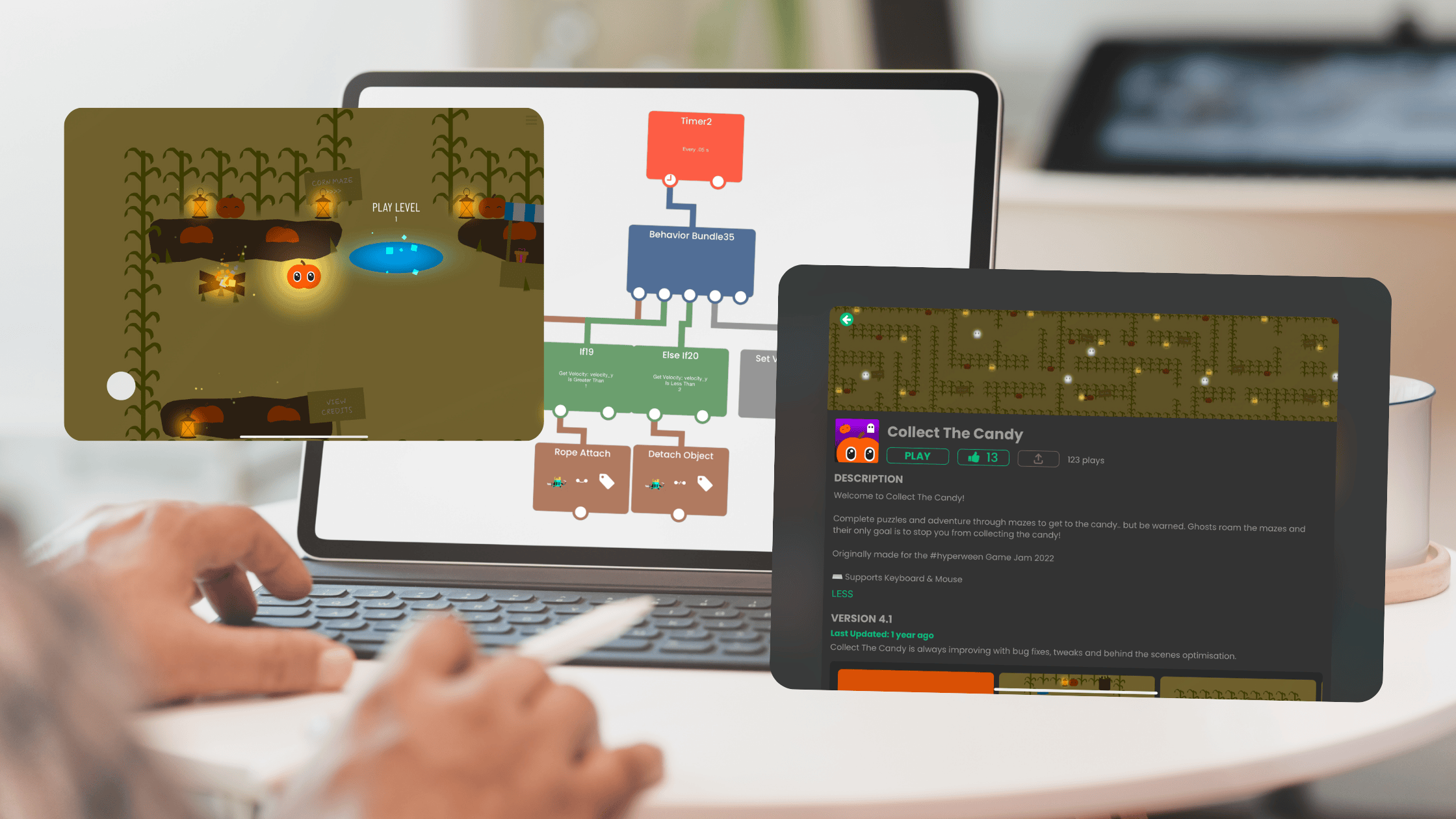
With hyperPad you build games on iPad by connecting Behaviors into a flowchart of your game's logic. When it is ready you Export to the App Store, and you keep 100% of your revenue.
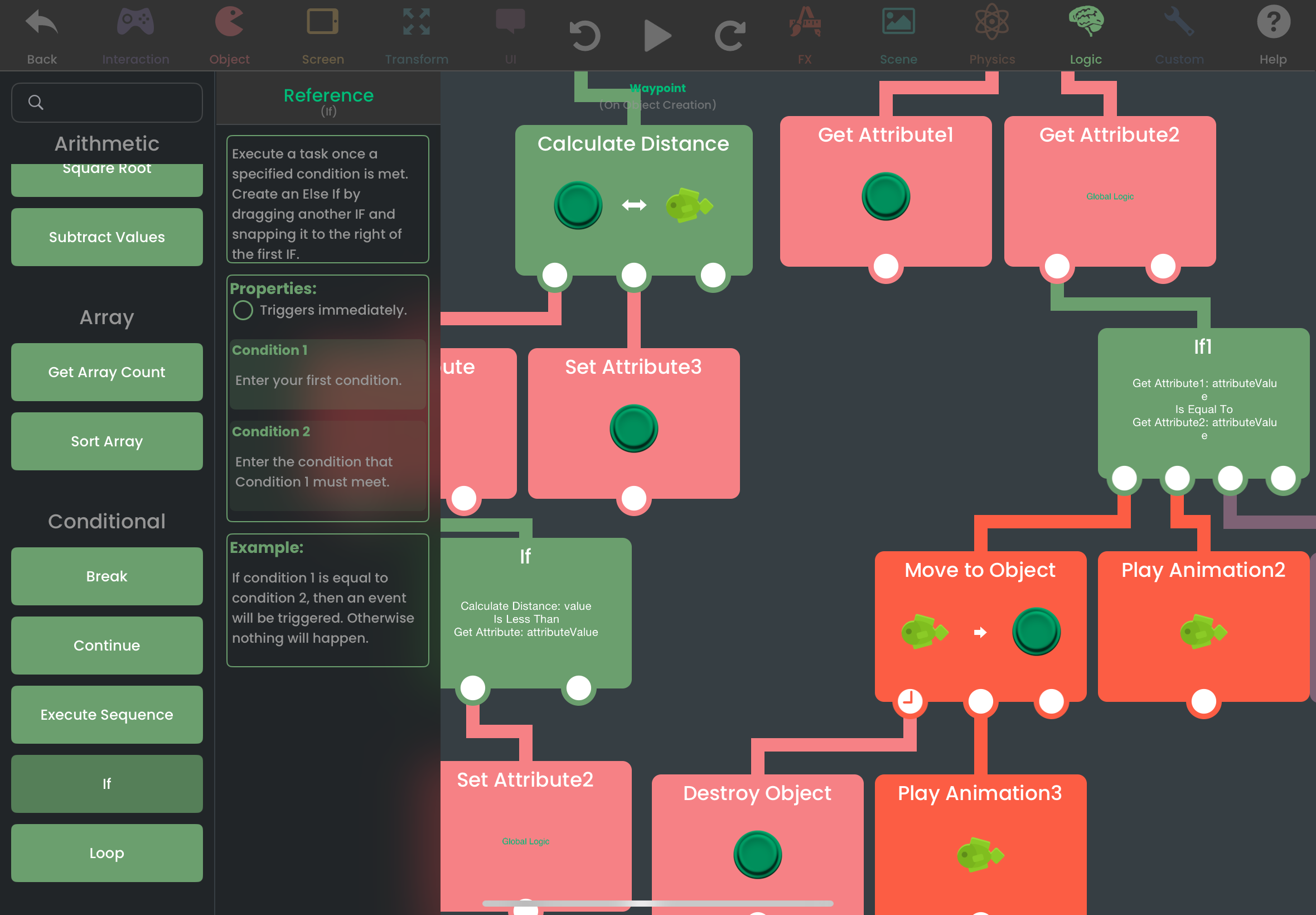
Visual coding with Behaviors in hyperPad
Make one game for free with hyperPad Starter. Make as many as you want with hyperPad for a one-time USD $14.99.
References
Eloranta, S. (2022). Nostalgia in marketing and consumer behavior.
McCarthy, N. (2019). Consumer spending and nostalgia.
Molina, B. (2016). Pokemon GO download records. USA Today.
Thubron, R. (2019). Pokemon GO passes one billion downloads. TechSpot.