
Teach Logic by Making Games on iPad

The world’s largest Rube Goldberg machine starts with a mechanical chicken laying an egg and ends by lighting a full-size Christmas tree in Riga, Latvia. The chain reaction runs 412 steps over nearly five minutes. That's a bit more than you'd find in a typical high school assignment. Machines like that one capture the idea behind hyperPad: a platform that lets even younger students build complex programming projects.
Even better, it teaches coding in the classroom without students needing to know how to code. So where did hyperPad come from?
Our Inspiration for hyperPad
hyperPad launched as GamePress in 2012, as a way to open up game and app development to everyone. It was aimed at hobbyists and aspiring developers with little or no background in coding. The team, led by Murtaza and Hamed Saadat, designed the platform for exactly that purpose.
Then the stories kept rolling in. Artists picked it up to create interactive portfolios of their graphics. Musicians made rhythm games that brought their tunes to life. Storytellers created rich media books. Children explored new worlds in hyperPad and then built worlds of their own. Teachers found it useful in classrooms from elementary school through post-secondary. The team quickly learned that hyperPad was especially good for teaching youth in the classroom.
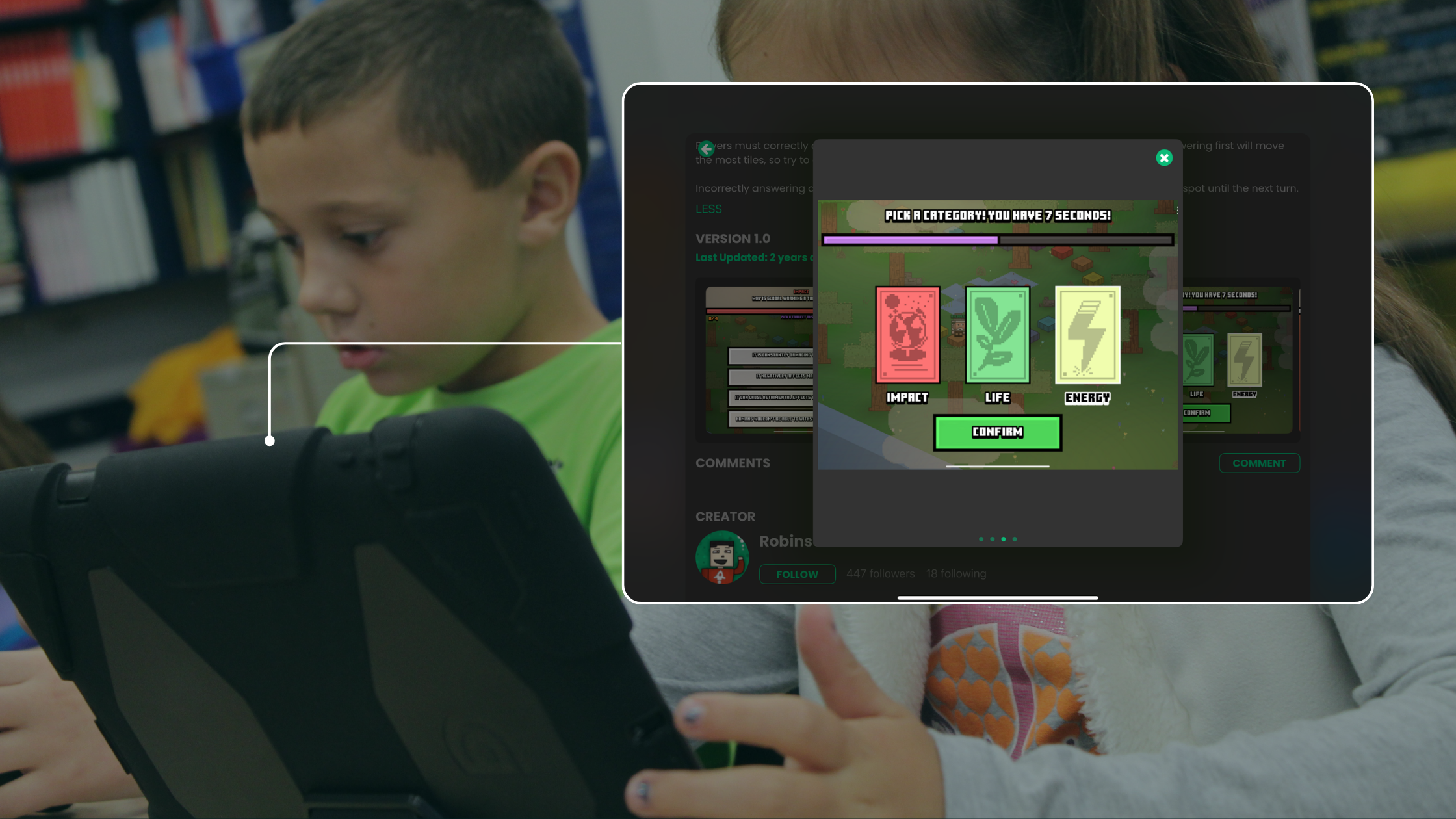
What we found was, on the education side, teachers were coming to the platform and using our app to teach kids programming, science, engineering, physics and more.
Perhaps the most obvious classroom use is teaching kids to code. That matters more now that schools in countries from Estonia to Singapore are increasingly including programming into K-12 curriculums.
“Let’s say you want to make a quick little game,” Saadat says. “Traditionally, you’d have to spend hours setting up your scene before you even get to the point of adding a graphic or a character. With something like hyperPad, you skip all of that.”
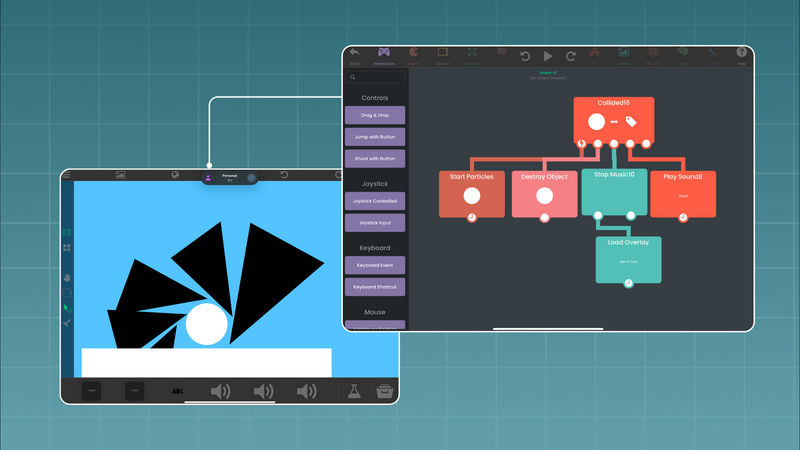
All learners have to do is drag elements onto a canvas, and hyperPad turns those into a part of the game or app.
Beyond Learning to Code
"Coding this way can feel a little like finger-painting or sculpting with Play-Dough," Saadat adds. That hands-on quality makes the platform a good fit for younger students. “It has that physical feeling to it where you’re manipulating something with your hands.”
Future coders aren't the only ones getting their hands dirty in the app. Students learning physics can see how forces like gravity and friction act on Objects in different situations. Young musicians can learn about notes, harmonies, sounds, and rhythms.
“One art-centered college in the US is using animations to make games out of artwork, using iPads as a portfolio for a gamified experience to presenting art in a unique way for someone to consume,” Saadat says.
Teachers are getting on board too, because they can create content designed for the needs of their own classes, he adds. “They’re not relying on something that has to exist already for them… they’re the ones who know that classroom best and they don’t have that barrier of entry either.”
Lowering Tech Barriers
For Alex D’Alton, Student Experience Coordinator at Renison University College’s English Language Institute, game-based, no-code platforms like hyperPad point to the future of education.
Games are meant to entertain. They can also carry your message: raising awareness, teaching, or sharing something else with your players.
D’Alton works with students from all over the world, with different experiences, nationalities, ages, and backgrounds. From that perspective, giving them an effective way to express themselves and create matters a lot.
Games are interesting because they cross language barriers. You can teach or learn through a game without it feeling so academic. A game can create a more relaxed space for learning, where creativity can flow without the pressure of a language barrier.
Preparing for a Software World
No-code platforms also reduce or remove skill barriers, he adds. In a software-heavy world, coding can become so complex that it excludes more people than it includes. Learning to code in the classroom, especially in an easy, accessible way, helps.
That’s part of the reason no-code solutions are increasing in popularity in sectors outside of education. “We’ve seen [programming] languages evolve that reduce the amount of lines of code from millions to just 10 … website development, which was a huge, huge business in the early 2000s, is all but gone because of large website players that allow you just to drag and drop,” D’Alton says.
He expects the same to happen in classrooms, regardless of subject or grade level, as tablets make technology more accessible and mobile. “That’s where I think you’re really going to see something like hyperPad flourish in the hands of students. It’s not just confined to the classroom. Through mobility, it can go anywhere and do anything.”
From Elementary School Through Career
Technology is already part of every student's education. From a young age, kids use word processors, presentation software, and more. As they move up through the grades, they learn more features and get more out of that technology.
hyperPad is the kind of software that grows with the students who use it, Saadat says, whether they’re building the world’s longest virtual Rube Goldberg machine as a school project or earning a living as adults by selling apps made on the platform.
That's what Saadat likes most about hyperPad. “It’s approachable from a really young educational level all the way up to post-secondary and beyond,” he says. He adds that it's capable enough to use professionally down the road.
https://www.youtube.com/embed/Vch5qZZCo1g?start=599
Check out this clip to see how you can create your own game!
Start building free with hyperPad Starter. When you want more projects and App Store export, upgrade to hyperPad for a one-time USD $14.99. You keep 100% of your revenue. Schools get 50% off through Apple School Manager, with Private Login.
Reach out to us at marketing@hyperpad.com if you have any further questions.